Court: State fails to provide adequate public education
Published 3:48 pm Wednesday, February 17, 2010
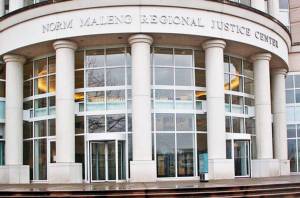
A King County Superior Court Judge recently ruled that the state of Washington is not meeting its constitutional duty to fully fund basic public education.
Judge John Erlick announced his decision on McCleary vs. State on Feb. 2 after taking almost two months of testimony in a case brought against the state by the Network for Excellence in Washington Schools, a coalition of parents, unions, community-based organizations and school districts, including the Auburn School District.
Auburn School District Superintendent Kip Herren called Erlick’s ruling “a landmark” decision.
“No other state in the United States has a Constitution that identifies, in Article 9, that public education is the paramount duty of the state, and this case clarifies ‘paramount,’ ” Herren said. “It says ‘paramount’ means ‘preeminent,’ first above all other things that the state is considering in its budget, and Judge Erlick ruled 100-percent in favor of that.”
Coalition members argued that the state was failing in its constitutional duty by relying on local levies, PTA fundraisers and donations to educate students. The state countered that it was meeting its duty.
Erlick said he based his decision on a 30-year-old state Supreme Court ruling that determined that the state must amply provide for basic education.
“Thirty years have passed since our State Supreme Court directed the State to provide stable and dependable funding for basic education,” Erlick wrote, adding that, although the state has made progress toward this constitutional obligation, it remains out of compliance.
“State funding is not ample, it is not stable, and it is not dependable. Local school districts continue to rely on local levies and other non-State resources to supplement state funding for a basic program of education. Recent legislation addresses, but does not resolve, the perennial underfunding of basic education,” Erlick wrote.
Erlick directed the state to determine the cost of amply providing for basic education and a basic program of education for all children who live in the State of Washington. He said that the State must also comply with the constitutional mandate to provide stable and dependable funding for the costs of basic education, and that funding must be “based as closely as reasonably practicable on the actual costs of providing such programs of basic education. The means of fulfilling this constitutional mandate properly fall within the prerogative of the Legislature.”
Erlick supported his decision by precisely defining “paramount,” “education,” “ample” and “all.”
Herren said the Auburn School District joined the lawsuit last year because the school board recognized that in the last 30 years local property owners and taxpayers have had to shoulder more of the burden for funding basic education. In the last legislative session, still more significant cuts to education funding were being enacted that the coalition insisted were in violation of the state Constitution, he said.
In a written statement, Washington State School Superintendent Randy Dorn called the bill “a first step” but added that it “doesn’t go far enough to amply fund education or eliminate the reliance on local levies.”
In a statement following the decision, Gov. Christine Gregoire said she “will be reviewing this decision to determine where we go from here,” opening the door on an appeal to the state Supreme Court.
Rep. Ross Hunter (D-Medina) then sent a letter to Gregoire and Attorney General Rob McKenna urging them not to appeal the decision. Thirty other state house members, including Rep. Skip Priest (R-Federal Way), signed the letter.
“The court did not tell us anything that we do not already know,” the letter stated. “The Legislature is not giving schools the money they need to provide the quality of education we want. The court has rather bluntly reminded us that we are required under our state’s constitution to make the education of our children our number one priority.
“The state did not tell us anything that we did not already know. The Legislature is not giving schools the money they need to provide the quality of education we want. The court has rather bluntly reminded us that we are required under our state’s constitution to make the education of our children our number-one priority … The state must have the opportunity to exercise its authority to comply with Article IX, section 1, as interpreted by the court … We hope that the savings from not pursuing the appeal process will be applied and focused on efforts to solve our state’s education financing problem. McCleary v. State is our opportunity to create a world-class education system. Our children deserve no less,” the letter concluded.