
Auburn residents tell City Council they oppose Flock cameras
Published 3:20 pm Wednesday, July 22, 2026
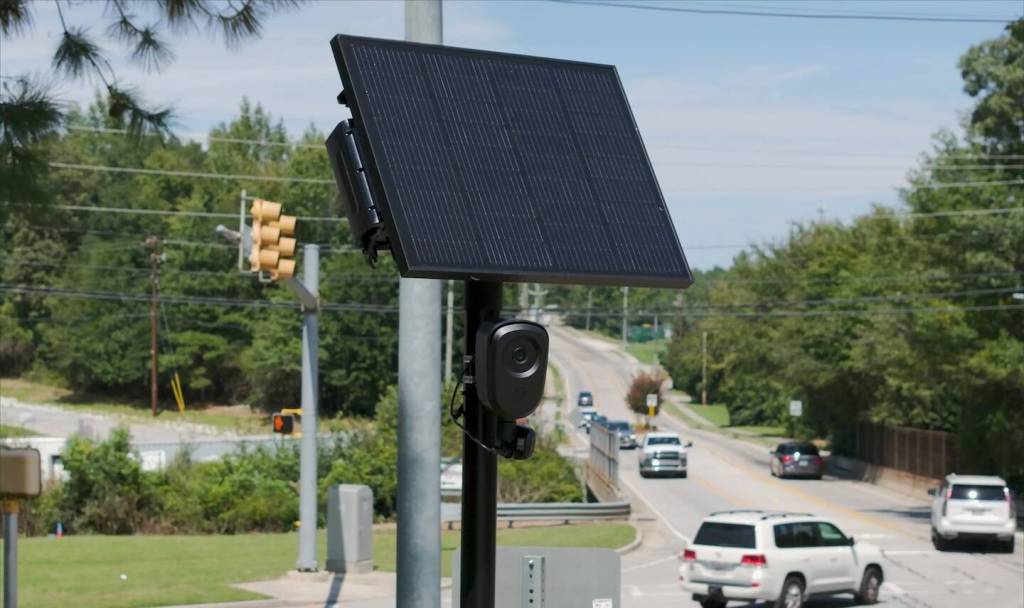
More than a dozen Auburn residents told the City Council they were enraged at the implementation of Flock cameras across the city.
At the bimonthly Auburn City Council meeting on Monday, July 20, more than 15 residents shared their opinions about the camera system during public comment. Some of the comments were in favor of the cameras, the overwhelming majority were against them.
Flock Safety, a private company headquartered in Atlanta, Georgia, uses Automated License Plate Recognition (ALPR) camera systems. Often, these camera systems are referred to as “Flock cameras.”
“A Flock camera is a license plate reader camera built to identify vehicle details that may help generate investigative leads,” according to the official Flock website.
The Auburn Police Department (APD) began its partnership with Flock in August 2024. Currently, there are 37 ALPR cameras throughout the city. Data is retained for 21 days and is used for law enforcement purposes only, according to the APD page on Flock’s website.
As of July 22, 622,389 unique vehicles have been detected over the last 30 days using this camera system in Auburn, according to the website.
Flock also explains that the cameras are not stereotypical surveillance systems. The company states that the cameras limit their tracking to vehicles. “That includes the license plate, along with attributes like make, model, color, and other visible characteristics,” according to the website.
Regardless of this promise from the company, at the council meeting residents explained how Flock cameras still make them feel uncomfortable and surveilled.
“As I understand it, my city is paying Flock to run 24/7 surveillance on me and my neighbors,” said Auburn resident Deborah Townsend. “I cannot trust that the surveillance data being collected about me and my neighbors will not be used against me and my neighbors. The risk of the misuse of the data is just too high.”
“I feel much less safe with these cameras in place,” resident Corr Ash said.
Brian Alberts shared a similar concern.
“They don’t make me safe or welcomed, they make me feel surveilled,” Alberts said. “They make me feel exploited. They make me wonder not about the city’s commitment to public safety but the various pitfalls that come with this type of approach.”
Alberts also spoke about his worry that Flock Safety is a private, for-profit corporation.
“This company has no commitment to Auburn,” Alberts said. “This company has no commitment to anything but its own profitability.”
In contrast to Auburn, Renton also had implemented Flock/ALPR cameras throughout the city until the Renton City Council paused the police’s use of the cameras on May 4. On July 6 the council postponed turning the cameras back on until all council members complete an orientation and training on the technology, according to the Renton Reporter.
Many Auburn residents surfaced their disapproval that the City of Auburn willingly signed a contract with Flock Safety.
“I implore you to cut the contract with Flock and to walk away from ALPR cameras,” resident Ava Hahn said. “They are not the right tool for the job of making us more safe.”
Sarah Blum has been a part of the Auburn community for more than 41 years.
“I am here to ask that you…cancel the contract and stop the invasive cataloguing of people and their identities,” she said.
“Invasive” was one of the most popular terms used by residents when speaking about Flock cameras at the council meeting.
Many residents also referenced Auburn’s July 13 Study Session meeting, where the City Council, Police Chief Mark Caillier and other community members met with a Flock representative to discuss the camera systems.
Sheerica Ware Wilkins, the public affairs manager for Flock Safety in Seattle, expressed that the cameras do not use facial recognition, track identities or have microphones to record sound of passerby.
“This is just a tool. We are definitely not taking the policing out of the police work,” Ware Wilkins said.
She also discussed Washington Senate Bill 6002 that was enacted on March 30 and implemented statewide restrictions on the uses of ALPR systems by government agencies. This bill includes restrictions on the length of data retention, locations that data is prohibited from being collected at, the use of the technology for immigration enforcement and more.
Washington state does arguably have some of the strongest restrictions on ALPR in place in the country, according to Ware Wilkins.
Many of the Auburn residents who spoke said they were upset that a representative from Flock was involved in the presentation at all.
“Bringing someone from Flock to speak on the matter is just insulting to us, we the people,” resident Jeff Wright said. “It makes you all look at best, incompetent as administrators and that’s a real problem when you are the administration.”
After this presentation in the Study Session meeting, many urged for a third-party audit of the existence of Flock cameras throughout Auburn.
Wright was one of the strong advocates for a third-party audit.
“A third-party independent audit of Flock safety and Auburn and anyone who uses it is the absolute minimum that you owe us,” he said.
Vicki Bates, a 26-year homeowner in Auburn, was in agreement.
“I urge you to approve an action calling for an audit of the use of ALPRs in Auburn,” she said.
Although the majority criticized this camera system, a few residents saw the positive potential of the partnership with Flock Safety.
Amy Kim shared her concerns about neighborhood safety in Auburn.
“Flock apparently is a big thing right now, but can you bring Flock to my neighborhood? Because I am irritated,” she said.
Kim has recently felt less safe in her neighborhood due to an alleged increase in crime.
“Do we need more cops? Do we need more Flock? Apparently that’s not popular, but I want more enforcement,” Kim said.
Ken Blevens is also a proponent of Flock cameras for reducing crime across the city.
“Come on people just quit going on the internet…They’re only getting the license plate. They’re allowing the cops to be alert…We want to stop crime,” he said.
A few community members resurfaced Auburn’s past controversy with their use of Flock cameras. In October 2025 the U.S. Border Patrol gained access to Auburn’s Flock camera system, APD shared in a press release.
According to the press release, “the City of Auburn has not knowingly allowed, nor will we allow, direct access to our Flock system by U.S. Immigration and Customs Enforcement (ICE), U.S. Border Patrol, or any other federal immigration enforcement agency.”
In this press release from last October, Mayor Nancy Backus stated that “the integrity of our public safety systems, and the trust our community places in them, is non-negotiable.”
Police Chief Mark Caillier provided a statement to the Auburn Reporter about the public’s concerns regarding the Flock camera system in Auburn.
“We hear the concerns residents have raised, and we take them seriously,” Caillier said “Auburn’s ALPR cameras are one public safety tool used to help officers identify vehicles connected to specific crimes, such as recovering stolen vehicles, robberies and homicide investigations, or locating missing or endangered people. Since their installation, they have provided valuable, life-saving leads in investigations ranging from auto theft to assault.”
Caillier said the cameras will continued to be used by police.
“We remain committed to using this technology responsibly and only for legitimate public safety purposes while protecting the privacy and civil liberties of our community,” he said.