Wildfire smoke alert issued for Puget Sound area
Published 3:50 pm Monday, August 3, 2026
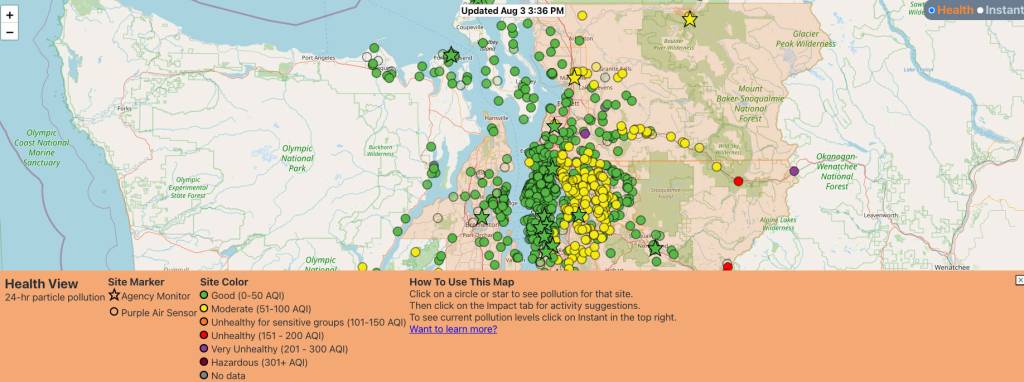
A wildfire smoke alert has been issued Monday, Aug. 3 from the Puget Sound Clean Air Agency and local health agencies of King, Kitsap, Pierce and Snohomish counties.
(Link to map: https://map.pscleanair.gov/?lat=47.6768311&lon=-122.4756425&z=9&v=0)
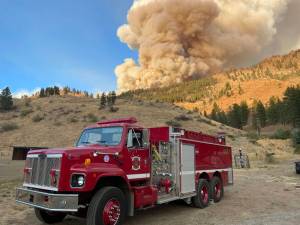
Air pollution is increasing due to wildfire smoke and may cause health problems, according to a Aug. 3 press release. Numerous wildfires are burning in Eastern Washington, including Spokane.
“We are experiencing significant smoke in Western Washington,” according to the release. “Air quality will likely reach moderate or unhealthy for sensitive groups for most of the Puget Sound area on (Monday) Aug. 3. The Cascades are already seeing wildfire-related smoke and could reach unhealthy in the afternoon. More smoke will move in tomorrow (Tuesday, Aug. 4) and air quality throughout the region could reach unhealthy and remain through Thursday, Aug. 6.”
Wildfire smoke can cause and worsen many health problems:
· Asthma attack
· Chest pain
· Coughing
· Fast heartbeat
· Headaches
· Irritated sinuses
· Stinging eyes
· Trouble breathing
Wildfire smoke can severely affect the respiratory and cardiovascular systems and increase health risks, especially for sensitive populations.
Everyone should take precautions, especially infants, children, and people over 65, or those who are pregnant, have heart or lung diseases (such as asthma or COPD), respiratory infections, diabetes, or are stroke survivors:
· Stay at home when possible. If you can’t stay cool at home or are especially sensitive to smoke, it may be best to seek shelter elsewhere.
· Limit your activity outdoors, such as running, bicycling, physical labor, sports, or hobbies.
· If possible, close windows in your home to keep the indoor air clean. If you have an air conditioner, use it in recirculation mode.
· Make sure your home ventilation system is maintained following manufacturer recommendations (like replacing filters regularly). Don’t contribute to indoor air pollution such as burning candles or vacuuming. Use a portable air cleaner if available.
· If you do not have an air conditioner, consider finding a public place with clean, air-conditioned indoor air like a mall, public library, or community center. Call ahead to make sure they have air conditioning.
· Heat can be dangerous too. If it becomes unbearably hot, it’s better to open the windows for a short period of time.
· Schools, camps, sports teams, and daycare providers should consider postponing outdoor activities or moving them indoors. Guidance for cancelling more general outdoor events can be found here.
· Masks with the label “N95” or “N100”, when worn correctly, are effective at reducing your exposure to smoke pollution. Other face coverings and poorly fitting masks typically offer little protection from inhaling smoke. Please check with your doctor to see if this is appropriate for you.
· People respond to smoke in different ways and at different levels. Pay attention to symptoms that you or those you are caring for are experiencing and take the above steps to reduce exposures at lower smoke levels if needed.
· Check with your health care provider for more specific health questions and concerns. As always, seek medical attention if symptoms are serious.
For more information on ways to reduce your exposure to smoke, see the Washington Department of Health’s Smoke From Fire tips.
Air quality conditions may change quickly. Check the air quality forecast regularly at the Puget Sound Clean Air Agency’s website.
Information from a joint press release by Puget Sound Clean Air Agency, Public Health – Seattle & King County, Kitsap Public Health, Snohomish County Health Department and Tacoma-Pierce County Health Department.