
Rebates, discounts available as PSE rates increase
Published 10:11 am Friday, June 19, 2026
Puget Sound Energy (PSE) customers may have already seen an increase in utility bills, but what is going on? Why are costs going up?
The Washington Utilities and Transportation Commission (UTC) approved several requests filed by PSE back in December 2025, with increased rates for both natural gas and electricity that began on Jan. 1 of this year.
Bellevue-based PSE is a subsidiary of Puget Energy and provides service to around 1.2 million electric customers and nearly 900,000 natural gas customers in ten Central and Western Washington counties, including King County.
In their press release, the UTC explained that PSE had requested the changes to support costs related to compliance with the Climate Commitment Act (CCA) and expansion of clean energy provided to customers as well as paying for investments to increase reliability and safety for customers and addressing low-income bill assistance costs.
While PSE blames the state’s push for renewable energy as one of the causes of rate increases, the corporate ownership of the majority of power lines in the state by Bonneville Power Administration (BPA) and of PSE itself are causing a block in the deployment of new renewable energy projects, according to reporting by ProPublica.
They found that “of the 469 large renewable projects that applied to connect to Bonneville’s grid since 2015, only one has reached approval,” and noted that this is a lower approval rate than any other region of the country.
The investigation found that “no major grid operator is as stingy as Bonneville in its approach to financing new transmission lines and substations needed to grow the power supply, according to industry groups that represent power producers.”
Challenges in getting approval to build new solar and wind projects have put the region behind many other states in renewable energy expansion, but time is also running out for PSE to get projects built that take advantage of federal tax credits that have been cut.
“Included in the rate plan are more than $529 million in federal tax credits that will directly benefit customers by reducing costs of new generation projects. Due to changes in federal tax law, these credits are expiring, creating an urgency to complete projects quickly,” PSE states in a general rate case explanation.
PSE also noted increased damage from wildfires and storms are also a factor.
The UTC said in December that the net impact of these first changes for electric customers is a roughly 12% increase or about $17 per month for the average residential electric customer using 800 kWh per month.
For natural gas customers, the UTC estimated a roughly 7% increase. The average natural gas residential customer using 64 therms a month and connected before July 25, 2021, will see an increase of about $6.50 per month.
PSE is currently going through the approval process for even more rate increases.
On Feb. 27, PSE filed a three-year rate plan with the Washington Utilities and Transportation Commission (UTC). For electric service, PSE is requesting overall increases of 15.2% in 2027, 3.7% in 2028 and 8.7% in 2029.
For natural gas service, PSE is requesting overall increases of 14.2% in 2027, 3.2% in 2028, and 3.6% in 2029.
PSE stated in a press release that “the rate adjustments are needed to support over $3.2 billion in infrastructure investments focused on system safety, reliability, meeting growing customer demand and compliance with Washington state’s clean energy requirements.”
Help with high costs
PSE offers a variety of programs to help their customers manage the high costs of utilities and to use energy more efficiently.
The Bill Discount Rate program can allow customers to qualify for a lower rate based on income and household size, and for those that need additional assistance, the Home Energy Lifeline Program (HELP) provides up to a $1,000 credit to help with bill payments.
Rebates are available for a variety of scenarios including the purchase of new appliances, EV chargers, heating and cooling, improvements in both home and window insulation, new construction, smart thermostats, efficient water heating systems and more.
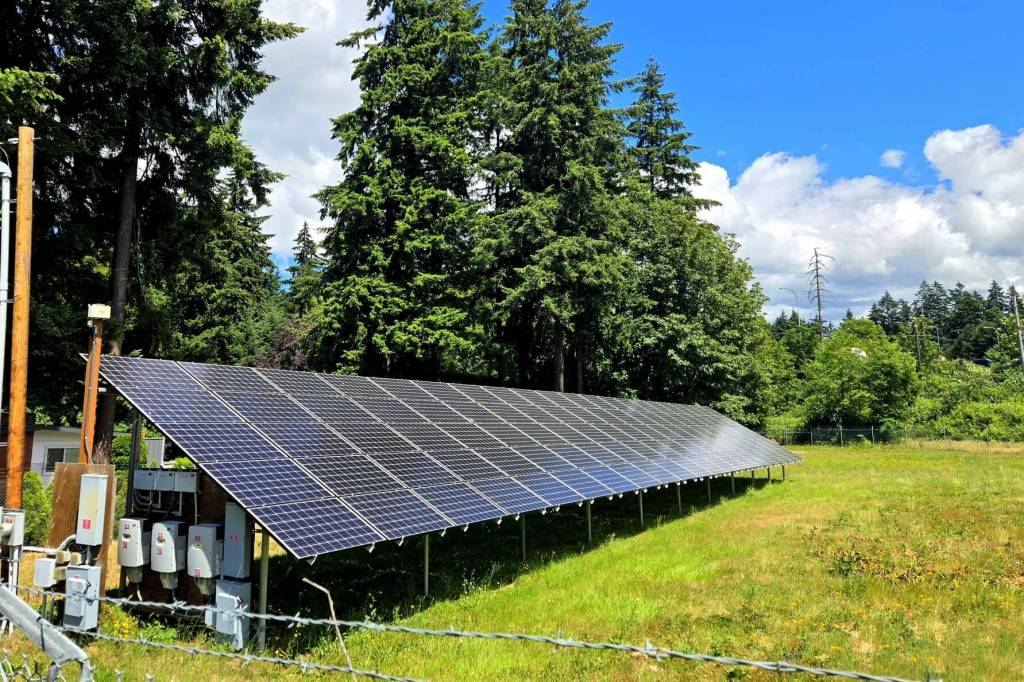
PSE customers may also be eligible for up to two free shares in the Community Solar income-eligible program, which can save customers approximately $10 to $20 per share per month.
Enrolling in this program means that “solar panels will be installed on the rooftops of publicly owned buildings and other properties across our service area. As a result, you can share the benefits of 100% local solar energy without having to invest in and install a rooftop solar system on your own. Whether you own or rent, there’s no roof or equipment required to participate.”
Another savings opportunity is in a new Peak Time Savings program.
Customers who choose to participate can save $.50/kWh during Flex events that are called by PSE when demand is predicted to spike.
Customers can save more—$1/kWh—by enrolling in PSE’s existing Flex Rewards program, where customers can sign up for a variety of programs to earn rewards by saving energy and/or allowing PSE to remotely adjust their energy usage during events of high demand on the energy grid.
“Any increase in monthly bills is difficult for the families and businesses we serve. We take that seriously,” president and CEO of PSE Mary Kipp said in a press release.
“At the same time, our customers count on us for safe, reliable energy, and many expect that energy to become cleaner in line with Washington’s climate laws. This rate plan reflects the balance we must strike: keeping our gas and electric system strong and dependable, investing in cleaner resources that will power our future, and doing so as responsibly and thoughtfully as possible,” Kipp said.
More context
Washington state is last in the nation when it comes to expansion of annual production of power from wind, solar, hydroelectric and geothermal energy, according to reporting by ProPublica.
Kansas, Nebraska, New Mexico, Rhode Island, Texas and Oklahoma have all increased their renewable energy by over 300% where Washington has actually gone the opposite direction at -3%.
Washington started with much higher renewable energy usage due to the high usage of hydropower, which is still the highest in the country. The issue is that the state has added other new sources like wind and solar at a much slower rate.
BPA owns “most of the power lines needed to carry green power from the region’s sunny and windy high desert to its major population centers. Bonneville has no state or local representation within its federally appointed bureaucracy and, by statute, operates as a self-funded business,” ProPublica reported.
The two states that have increased their renewable energy usage the fastest are Nebraska and Kansas, both of which have a uniquely high percentage of municipally owned power utilities.
Nebraska is the only state in the country that is served 100% by publicly-owned utilities and Kansas has one of the next highest rates of municipal rather than privately owned utilities.
This state ownership has made it much easier for them to align legislative and utility priorities and make actual progress on the production of renewable energy, although their infrastructure is also under similar strains due increasing demand.
Share feedback on rate increases
The public can comment on these proposed rate increases by filling out a public comment on the UTC website.
Details of the case docket 26005 and 26006 are also available on the UTC website for review
Public hearings are scheduled for Sept. 29, 2026 (in-person) and Oct. 7, 2026 (virtual) where customers can comment on the proposed rate changes.
The UTC review process may take up to 11 months, according to PSE so the final approved rates may differ from PSE’s request.