Auburn-area veterinarians pull together to offer animal shelter option
Published 4:15 pm Wednesday, May 25, 2011
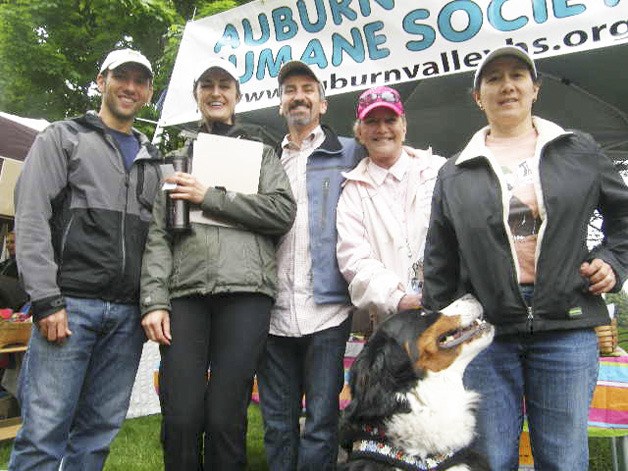
Members of the Auburn Valley Humane Society called it their “coming out” event.
All day long, the curious stopped by AVHS’s booth during the Petpalooza Festival at Game Farm Park to wish the veterinarians and board members well with the animal shelter they hope to set up in partnership with the City of Auburn.
“My gosh, people are really supportive,” said Dr. Emily Purvis, a relief veterinarian for veterinary hospitals from the Seattle area to Bremerton and a member of the 16-member board of directors. “I mean, who in the city is not supportive of helping animals?”
“We’re getting a great response,” said Kim Spooner, volunteer with AVHS, with Nikki, a 2-year old Bernese mountain dog, at her side.
Board member Paul Wolf-Pulmilia, MD, said the idea has always been to establish a humane society in Auburn, provide animal control for Auburn and “offer better service and a shelter than residents presently have.”
When the City entered into the current animal control contract with King County last June, it gave up its dedicated animal control officer, and costs went up. Auburn City Councilman John Partridge then approached area veterinarians and asked for ideas. The result is a plan that will allow Auburn to opt out of the county contract when it expires in 2012.
Under the terms of the contract now being negotiated with the City of Auburn, AVHS would run the shelter in a city-owned building on A Street Southeast, which the City would lease to it for $1 dollar a year. The City would provide animal control services and foot the bill for an animal control officer, answering a common concern — that animal control officers are spread extremely thin under the current contract with King County. The county officer who covers Auburn is responsible for a 300-square-mile area, extending from Federal Way east to the county line.
The City will sell pet licenses within city limits, and the proceeds will support the shelter. Beyond merely licensing dogs and cats and other animals, the veterinarians want to give the public a personal stake in the shelter and animal services.
“The idea is to make it a community organization, so that when people buy their licenses, they are not just paying a tax, but they can go and see what animals services they get for that license, right here in Auburn,” said Don Edwards, veterinarian at Green River Veterinary Hospital, and one of the founding members of AVHS.
The shelter, Edwards said, would provide programs for youth, 4H and volunteer training. School organizations and youth organizations could work there and learn about animals. Young people interested in veterinary medicine or animal-related careers could gain valuable experience there. As a smaller shelter, the facility would offer more personal service. The AVHS will sponsor community events for pet adoptions, seeing to it that people adopt as many pets as possible from the shelter. The shelter will also return lost pets to their owners.
“There is definitely a need,” said Suzanne Nagy, office manager for Auburn Veterinary Hospital and a member of the board. “I’m not saying that King County isn’t doing a great job, but every time we have an animal that comes from the King County Humane Society, we have to leave the pet in the car because, more often than not, they have a respiratory infection or something that might be contagious to another animal. They seem to be maxed out, and we can probably alleviate some of their strain and also provide a great service for the Auburn community.”
“I think the greatest asset is going to be two fold,” Purvis said. “A lot of it is going to be the animal control aspect. People underestimate the responsibilities of an animal control officer as just a person who knocks on the door trying to get licensing done. But they are really a protector of pets. We have a huge overpopulation of stray and feral cats in the area, and by targeting certain areas and learning what those areas are, the officer can then identify where our project needs to extend to reduce that. In return, you cut the euthanasia rates within the shelter situation. But it will take time.”
The remaining veterinarians on the board are doctors Kimo Jow, Eric Schneider, Ivy Engstrom, Kyle Taylor, Robert Engest and Phil Beachy.