Auburn man sentenced for Aug. 2022 murder with rifle stock
Published 8:00 am Thursday, August 28, 2025
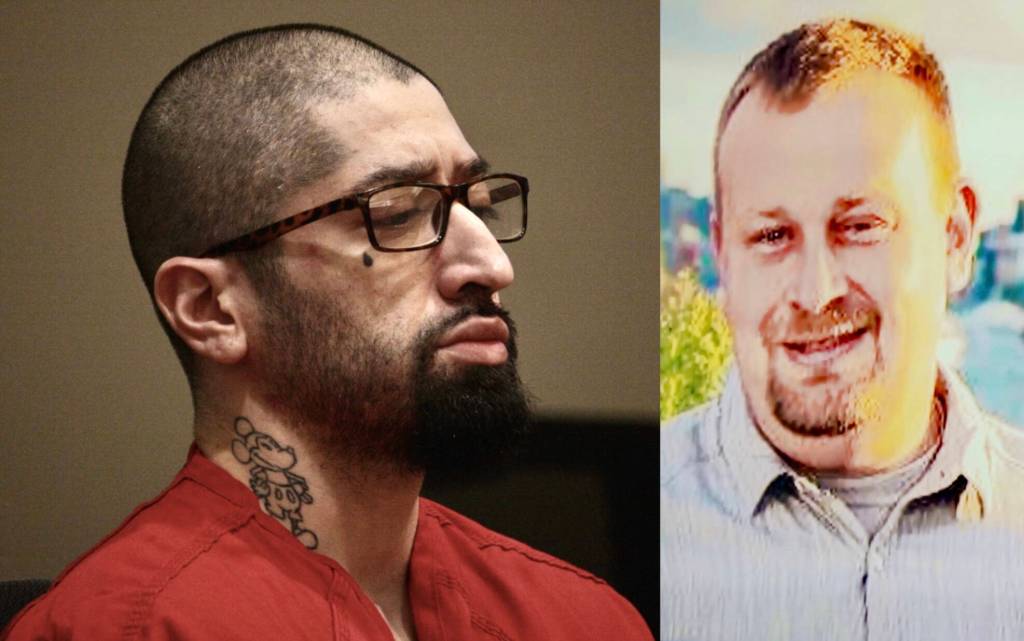
An Auburn man was sentenced to 18 years in prison after he pleaded guilty to a murder where he told officers at the scene that he had bashed a man’s face with the stock of a rifle.
On Aug. 22, a judge sentenced Francisco Javier Ochoa-Prado, 34, of Auburn, to 192 months in prison plus a 24-month deadly weapon enhancement — 18 years — for second-degree murder stemming from Ochoa-Prado killing one of his ex-girlfriend’s roommates, Daniel Parkinson. Ochoa-Prado repeatedly struck Parkinson in the head with the stock of a rifle at about 7:10 p.m. Aug. 1, 2022, at a home in the 29000 block of 118th Avenue SE, according to charging documents.
When officers arrested Ochoa-Prado, he told officers that he had been smoking methamphetamine and Percocet that day, according to charging documents. Ochoa-Prado told officers that he was upset with Parkinson because he thought he had disrespected him and that Parkinson had assaulted his ex-girlfriend.
According to documents, Ochoa-Prado did not provide validation for the statement that Parkinson assaulted his ex-girlfriend, and when he admitted to killing Parkinson, he said he did not regret it.
“I asked Francisco if he regretted his action, or had any remorse for killing Dan. Francisco repeatedly said ‘no,’ and that he does not believe in regrets,” documents stated about an interview with officers. “At one point, he asked us to clarify if Dan was really dead. When we confirmed that Dan was dead, Francisco replied, ‘Thank God.’”
Documents state that Ochoa Prado’s ex-girlfriend told police that she had broken up with Ochoa-Prado due to his drug use, and on the day of the incident, they had been arguing, and she told him not to return to her home. It appeared that Ochoa-Prado was upset by the breakup and believed his ex-girlfriend and Parkinson had begun dating.
Plea agreement and sentencing
Prosecutors initially charged Ochoa-Prado with first-degree murder, but following a plea agreement, his charge was reduced.
According to court documents, the initial charge of first-degree murder carried a standard sentencing range of 240 to 320 months, plus a deadly weapon enhancement, but the charge was amended in a guilty plea agreement to second-degree murder. The charge was amended due to evidentiary considerations and mitigation evidence provided by Ochoa-Prado’s defense attorney, Karri Ridgeway.
Ochoa-Prado’s offender score for the crime of second-degree murder with no prior felonies was zero, putting his sentencing range between 123 and 220 months, plus a 24-month deadly weapon enhancement. According to documents, Ochoa-Prado’s defense recommended that he receive the lowest sentence possible, a total of 147 months, while prosecutor Brandy Gevers asked for the highest sentence possible, 244 months.
Ochoa-Prado’s defense argued that there were mitigating factors to warrant a low-end sentence, such as evidence showing that Ochoa-Prado did not commit the killing because of rage, jealousy or malice, but that he was acting on delusional beliefs after drug use caused symptoms of psychosis. Ochoas-Prado’s defense also cited that his actions were out of character for him and that he has plans for improvement post-incarceration that include addressing his substance use issues, which will be difficult for him to achieve while incarcerated.
“This is someone who is peaceful and loving to his core. Something like this could not be more antithetical to who Mr. Ochoa-Prado is and how he’s demonstrated himself to be for his entire life,” Ridgeway said. “Trying to make sense of what happened is something that he grappled with in those moments and frankly something that he continues to grapple with.”
Prosecutor Gevers argued that the state was asking for the high-end sentence after considering all of the discovery, including the body-worn camera showing Ochoa-Prado at the time of his arrest, his videotaped confession to the crime and the brutality documented in pictures and video of Parkinson’s death. Additionally, Gevers stated that this case was more distinguishable than other second-degree murder cases that the court has seen because of evidence showing that Ochoa-Prado repeatedly beat Parkinson with the intent to kill him.
According to King County Superior Court Judge Matt Lapin, he decided Ochoa-Prado’s sentence after looking at the purpose of the sentencing reform act, the facts of the case, the way Ochoa-Prado killed Parkinson, factoring in other mitigating circumstances and also attempting to be consistent in terms of how the court has sentenced other individuals in similar situations. Lapin said Ochoa-Prado should receive some consideration for the fact that he took responsibility through pleading guilty, but that when drug use affects others, people need to be held responsible.
According to a victim impact statement from Kathy Hummel, Parkinson’s aunt, Parkinson was the first grandchild in their family, and he was adored and loved by their family. She said that Parkinson had many plans for his life, such as buying a home and traveling.
“Three years ago, Dan’s family and friends were handed a life sentence due to the actions of one man. Not only to live without a son, a nephew, a cousin, a friend, a housemate and a co-worker, but to live with the knowledge of the vicious manner of his death,” Hummel said. “While of course we hear these things on the news, when it happens to a loved one your world perspective is destroyed. The world suddenly feels like a dangerous place.”