Kent receives approval for Quiet Zone along railroad tracks
Published 1:07 pm Friday, June 19, 2026
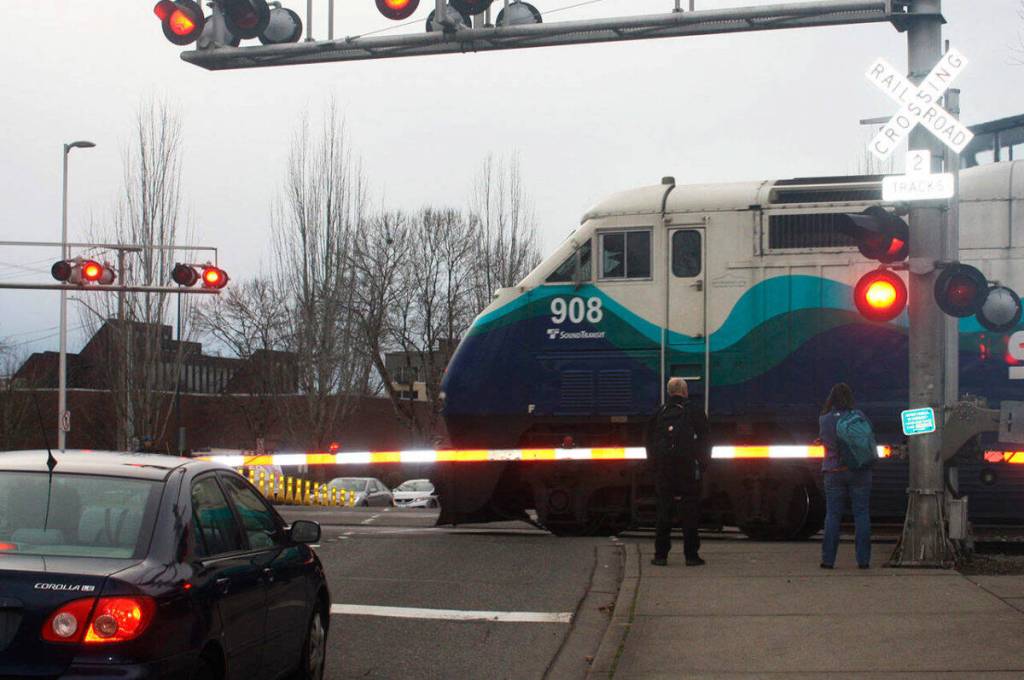
Kent city leaders are blowing their own horns after receiving federal approval to create a Quiet Zone that will no longer require train engineers along the BNSF Railway tracks to sound their horns through the east end of downtown while approaching crossings.
City leaders are excited because it’s a project that started more than 14 years ago, but moved like a slow train. Mayor Dana Ralph announced at the June 16 City Council meeting that the Federal Railroad Administration (FRA) approved the city’s application. The change will start the last week of August.
“This is a major accomplishment for our community and something residents and businesses have been asking for over many years,” Ralph said. “I want to especially recognize our Public Works Department for their persistence and dedication throughout this process. Their technical expertise and commitment helped Kent meet rigorous federal requirements and bring this long-standing community priority across the finish line.”
Mill Creek neighborhood residents raised the noise issue with the council in 2011 to improve the safety around railroad crossings so engineers would no longer have to sound their horns as they speed through Kent crossings. The council studied the issue after those noise complaints, although it first heard a staff report about a quiet zone in 2005 after the FRA provided the requirements for a public authority to establish and maintain a quiet zone, according to city documents.
It turned into a long, slow process with so many agencies involved and the crossing improvements required by the FRA for the city to install.
The city invested about $3.5 million over the years to implement the safety improvements and infrastructure necessary to qualify for the Quiet Zone designation, according to a June 18 email from the city communications team. Approximately $2.5 million was funded through grants from the Washington State Department of Commerce, with the remaining investment provided by the city.
The improvements included crossing safety upgrades and other measures required under federal standards to establish the Quiet Zone and maintain rail and public safety while reducing routine train horn noise through downtown. Quiet Zones are designed to balance community quality of life with continued safe railroad operations.
“From the city’s perspective, this represents a strong return on investment,” according to the city communications team. “By securing significant state funding support, Kent was able to leverage outside resources to deliver a long-requested quality-of-life improvement for residents and businesses located near the rail corridor while also making lasting safety improvements at crossings.”
The Quiet Zone will extend from South 259th Street in the south to South 212th Street in the north and marks the culmination of more than 14 years of planning, coordination, engineering work and advocacy by city officials. Amtrak passenger, Sounder commuter and many freight trains use the tracks.
The approved Quiet Zone includes all eight BNSF mainline crossings at:
• S. 212th Street
• James Street
• Smith Street
• Meeker Street
• Gowe Street
• Titus Street
• Willis Street (State Route 516)
• S. 259th Street
Federal regulations require horns sound beginning 15 to 20 seconds before entering highway-railway grade crossings, but a Quiet Zone overrides that requirement unless an engineer sees someone or something on the tracks.
Train horns remain an important railroad safety tool and are generally required under federal law at public highway-rail grade crossings unless communities meet specific safety requirements, according to a June 18 city news release. To qualify for a Quiet Zone, local jurisdictions must complete extensive safety analysis and implement approved measures to offset the absence of routine horn sounding.
As part of Kent’s Quiet Zone approval, the city completed safety improvements at several crossings that included raised concrete medians, pavement markings, and enhanced signing designed to improve driver awareness and reduce the potential for unsafe crossing movements, according to the news release.
The city Public Works Department led the effort over many years, coordinating technical analysis, engineering improvements, railroad coordination, regulatory compliance and engagement with federal partners to satisfy the requirements of the Quiet Zone Program.
The Quiet Zone designation will take effect the week of Aug. 24, following completion of required notifications and implementation steps.
Train operators may still sound horns in emergency situations, to warn pedestrians, trespassers, animals, or vehicles that are illegally on or near the railroad right-of-way, or whenever the engineer believes conditions require additional warning. Train horns may also continue at spur crossings outside of the designated Quiet Zone.
The council and city staff worked with BNSF Railway, the FRA, the state Department of Transportation and the state Utilities and Transportation Commission to bring a Quiet Zone to town.
The Quiet Zone does not cover the Union Pacific (UP) tracks west of downtown, although fewer trains use that route. UP on its website states it doesn’t endorse quiet zones.
“Union Pacific believes quiet zones compromise the safety of railroad employees, customers, and the general public,” according to its statement. “While the railroad does not endorse quiet zones, it does comply with provisions outlined in the federal law. Federal regulations provide public authorities the option to maintain and/or establish quiet zones provided certain supplemental or alternative safety measures are in place and the crossing accident rate meets FRA standards.”
Other quiet zones
There are 13 quiet zones in Washington state, according to FRA website data, last updated in 2022. Mukilteo, just southwest of Everett, is the closest one to Kent. Other cities with quiet zones include Vancouver, Bellingham and Spokane Valley.
Deaths by train
Even with the current horn warning system, Kent has had two pedestrians killed by trains so far this year, both in February, and 27 pedestrians killed by trains in the city over the last nine years, according to the Washington Utilities and Transportation Commission website. Three were killed in 2025, two in 2024, one in 2023, four in 2022, seven in 2021, three in 2020, four in 2019 and one in 2018.
Kent Police and the King County Medical Examiner’s Office try to determine the cause of deaths, which are often listed as accidents if they are unable to confirm by witnesses or relatives if the incident was a suicide or not. The Federal Railroad Administration (FRA) on its website states that nationally hundreds of people lose their lives every year on railroad tracks due to suicide.
In the Kent incidents, reports typically indicate that engineers sounded their horns after seeing a pedestrian on the tracks, but with the high speed and long length of the trains they usually cannot stop before a collision with the pedestrian.