
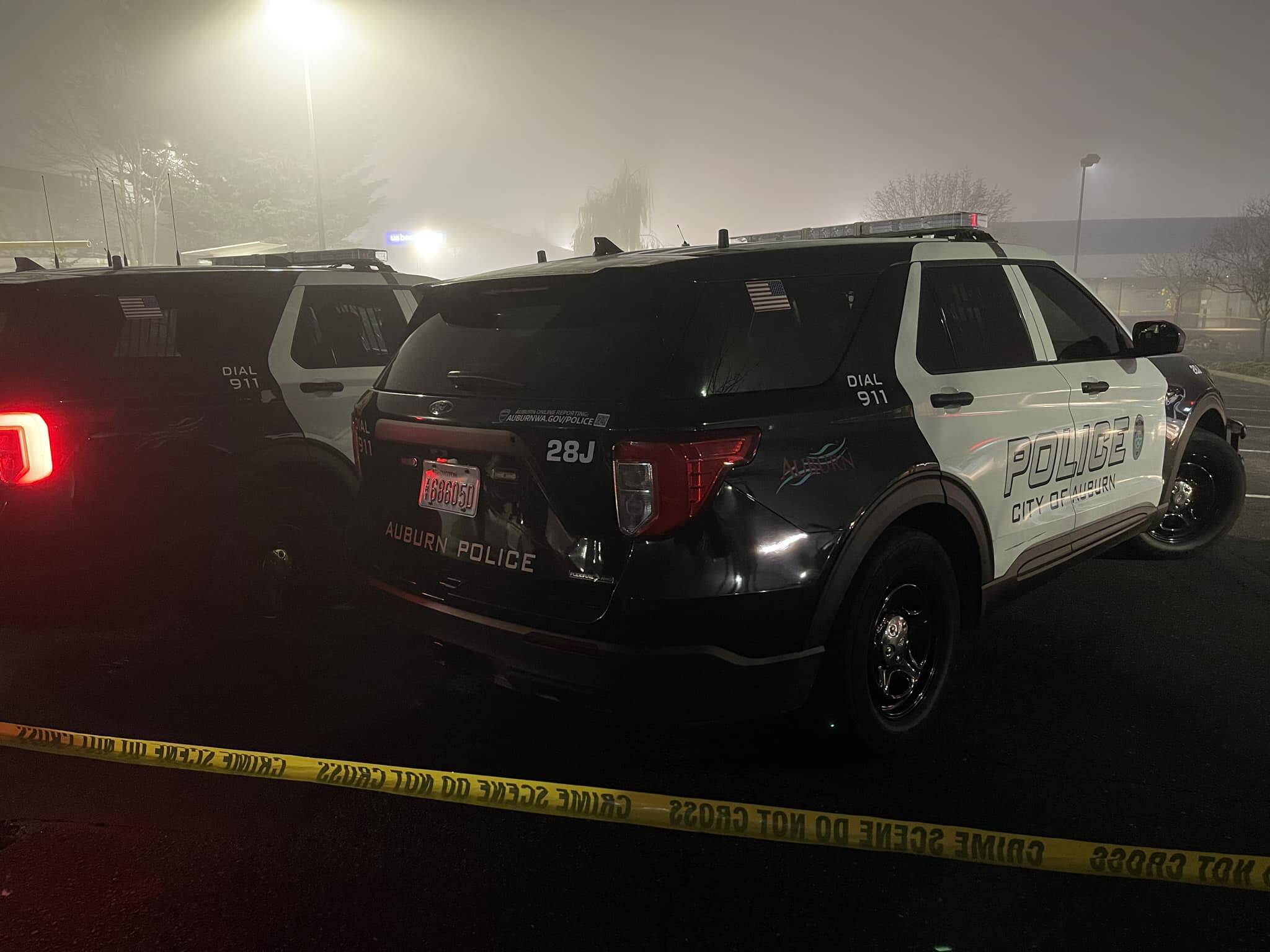
The Auburn City Council voted Nov. 17 to add a one-tenth of 0.1% sales-and-use tax for criminal justice purposes.
City officials say the tax represents a significant additional source of funding to address public safety needs as well as maintain programs and services that a new state law allows the city to spend the money on. These include domestic violence services, public defenders, diversion and re-entry programs, programs to reduce homelessness and improve behavioral health, community outreach and assistance programs, alternative mental health crisis response programs, and community placement for juvenile offenders.
The vote was unanimous.
“The tax is not new. We’ve had this option historically,” Jamie Thomas, the city’s financial director, told the council at a work session last week. “But it required a majority vote of voters as it wasn’t a councilmanic option, and was limited just to public safety. This is much more flexible.”
The councilmanic option allows a city to take action without a public vote.
Assuming a roughly $95,000 median household income, Councilmember Kate Baldwin calculated that the average taxpayer will pay an extra $19.07 per year, but get a lot for it.
“When we’re talking about the need to make sure we can have a solid police force with enough officers to cover the geography of the city, when we talk about making sure we can continue to afford our costs with regards to the SCORE Jail and more people to support our prosecutors in being able to address crime within the city, I think that people need to understand what is being asked of them, and what they are getting in return,” Baldwin said.
“Our community,” said Councilmember Tracy Taylor, “has spoken loud and clear over the years with our community meetings, saying that public safety is the top issue that we have in our city. And giving us another mechanism to provide that is extraordinary. It’s a penny on a $10 purchase. I look at it as a win, not only for our police department, but for our city as a whole.”
In the case of a sales tax, the tax will be assessed on the selling price, or in the case of a use tax, on the value of the article used. It will apply henceforward to taxable events on or after April 1, 2026.
The new state law has a second funding mechanism that opens grant opportunities for the hiring, training and retention of police officers over the next three years. But as it covers only 75% of an officer’s salary up to $125,000 per year, per officer, the city will have to come up with a 25% local match if it uses the grants to pay for salaries and benefits.
At this time, Thomas said, the city is not asking for the authority to move forward with the grants. It is only asking to add the 0.1% on the sales-and-use tax. If the city adopts that, it has the option to seek grant funding later, but only when it has in place policies consistent with the state attorney general’s Keep Washington Working Act Guide.
To the extent an additional sales tax would cause the total rate of tax for sales of lodging to exceed the state permitted maximum, the proposed law exempts lodging sales.
In other action, the city council:
• Set the city’s levy for regular property taxes for collection for general city operational purposes in 2026 at $25.8 million.
• Granted a franchise to Soos Creek Water and Sewer District to continue to operate sanitary sewer facilities.
• Granted to Hyperfiber of Washington LLC, doing business as Ripple Fiber, a franchise for wireline telecommunications.