
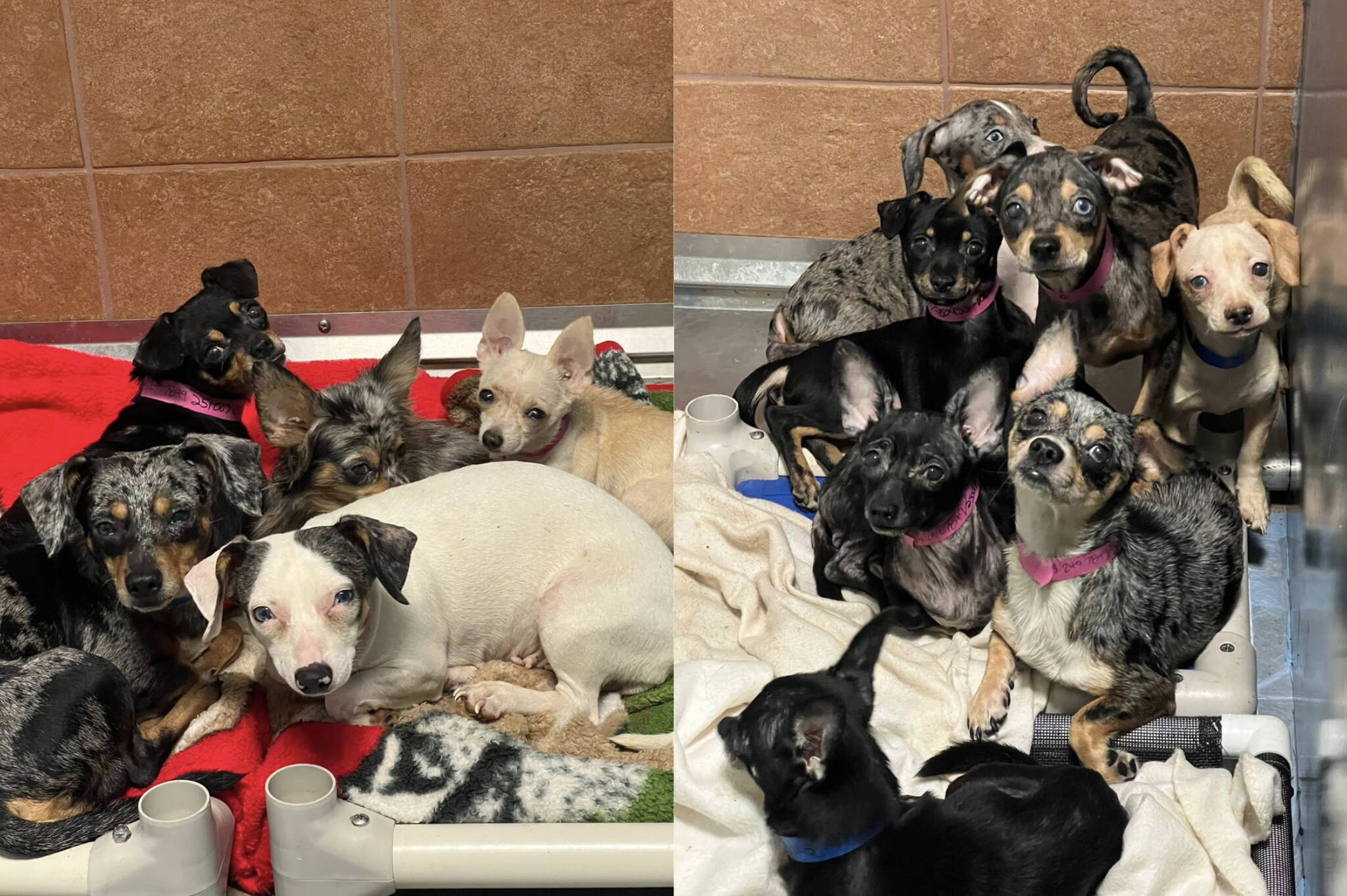
103 dogs consisting of chihuahuas, dachshunds, or a mix of the two, have made their way into the Auburn Valley Humane Society after they were recovered from a duplex — and many will be available for adoption as soon as they’re medically cleared.
What started as a rehoming operation for 50 dogs turned out to be double the load when the Auburn Valley Humane Society (AVHS) recovered a total of 103 dogs consisting of chihuahuas, dachshunds or a mix of the two — often nicknamed chiweenies, according to Katrina Megrath, CEO of operations and animal care.
This situation first came to AVHS’s attention when a community member told the society that she started with five dogs and was having trouble finding resources for spaying and neutering, but Megrath said things got out of hand, resulting in a large number of dogs.
Megrath said when they entered the home, they realized it was going to be a much larger operation, and they ultimately ended up with 103 dogs. According to the Auburn Police Department, the dogs were recovered from a two-bedroom duplex.
“So it’s been a busy week of just, you know, rallying together with other organizations in the area to find places for these dogs and people to care for them,” Megrath said. “Luckily, our community has come out in full force with foster applications and donations and has been incredibly supportive.”
Megrath said AVHS now has 27 dogs, as other animal organizations in the region took in many of the dogs. She said Seattle Humane, Humane Society of Skagit Valley, Forgotten Dogs Rescue and Center Valley Animal Rescue also took in dogs.
Megrath said regarding adoption or fostering, it will take a few weeks for AVHS to complete all of the dogs’ vetting, which includes spaying and neutering them, as well as treating their skin health. Several of the dogs have had limited opportunities for socialization, so they will need to spend time in an experienced foster home to learn socialization at a comfortable and gradual pace. She also said some of the dogs need to be potty-trained.
For people who want to help the new dogs at AVHS, Megrath said she would recommend making financial donations to support medical care, which includes spay and neuter services. She said people should also consider donating to the other organizations that took in dogs from this batch.
Megrath said the dogs’ ages range from two to five years old, and all of the dogs, except for one, are either chihuahuas, dachshunds or a mix. She said these kinds of dogs are small breeds, good companion dogs, good house dogs, and they’re very affectionate and like attention.
Megrath said some of the dogs are experiencing some anxiety, but they’re happy to have clean beds, plenty of access to fresh water and food and more individualized attention. She said all of the dogs are adorable and unique in their own ways, but personally, she’s more drawn to the shy ones.