Trains carrying highly flammable shale oil through Auburn raise new public safety concerns
Published 3:01 pm Wednesday, January 20, 2016
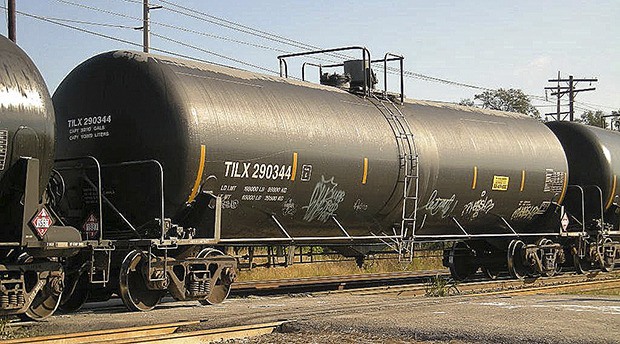
Mile-long behemoths pulling tank cars freighted with millions of gallons of volatile shale oil from the fields of North Dakota, Colorado and Wyoming.
Every day, trains hauling the black, cigar-shaped cars clatter along the tracks through Auburn and other cities of King County on their way to refineries up north, bearing cargo as flammable as gasoline
While the odds of a derailment or explosion in Auburn, emergency personnel familiar with the issue say, are about equal to those of a person winning the Powerball, as singer Elvis Costello famously noted, “accidents will happen.”
In July of 2014 a runaway train carrying 30 cars of Bakken crude oil crashed and burned down the town of Lac Mégantic in Quebec, Canada, killing 47 people.
In 2009, a train carrying ethanol derailed and blew up, killing one person in Cherry Valley, Ill. The National Transportation Safety Board declared that the design of the tank cars made them “subject to damage and catastrophic loss of hazardous materials.”
On Dec. 30, 2013 a train carrying crude oil derailed in Casselton, N.D., causing violent explosions and a hazardous plume of smoke.
Hazard by rail isn’t something new to the fire service — it has been a concern since train number one lumbered down the tracks. The new reality, however, say emergency personnel in Auburn, represents a sizable amplification of hazmat by rail.
“What we’re talking about with the crude oil is massive quantities of a flammable product, moving through what are essentially urbanized areas, like downtown Seattle or through our corridor here,” said Valley Regional Fire Authority Chief Mike Gerber.
“The difference of that versus the occasional train that goes through hauling an industrial chemical, or chlorine or whatever is that these things are giant. They’re a mile long, full of millions of gallons of this volatile crude oil coming out of the shale. And if a train does catch on fire, they know now that it’s highly flammable, in fact, far more flammable than what crude oil used to be,” Gerber said.
Information such as how many trains pass through a city like Auburn every day and when they will come through the railroads consider proprietary, information that should not be disclosed for reasons of public safety, said Auburn Traffic Safety Engineer Joe Welsh.
According to the Association of American Railroads, some 400,000 carloads of crude oil traveled by rail in 2013 to the nation’s refineries, up from 9,500 in 2008,
In the spring of 2014, the State of Washington issued its Marine and Rail Oil Transportation Study.
Gov. Jay Inslee read the report, got on television, and declared, “we need oil train safety.” The feds stepped in and said, “we need to start talking about rail safety and regulations.” There was talk of 25 to 30 more oil trains a day headed to refineries up north for off-loading, refining and shipping oil to overseas markets.
Time out, said influential voices, including that of Auburn City Councilman Bill Peloza, we need to look at this. His attention was riveted to the issue by newspaper editorials in 2014 and by his own extensive research.
What Peloza has done since is raise concerns about possible effects on public safety, water resources, the environment, the economy and traffic. At his urging, on April 1, 2014, following what other cities were doing, the City Council passed a resolution requesting that agencies conducting environmental reviews study the issues outlined above and asking that Auburn “be included in any environmental impact statements related to any project that may cause an increase in oil rail traffic through Auburn.” It also asked that the federal government immediately implement safety regulations affecting older tank cars, train speeds and other identified hazards associated with flammable crude oil.
“We’re not going to stop the trains from running, but we can regulate things like speed,” said Peloza, who brought the subject to the attention of U.S. Sens. Patty Murray and Maria Cantwell.
In 2014, the King County Council directed its office of emergency management to run a tabletop scenario to see what a worst-case, worst-place scenario would look like.
The scenario was that a mile-long train, headed north on the tracks, had derailed at the boundary between the cities of Tukwila and Seattle along Interstate 5, just to the side of West Marginal Way where the Duwamish River runs through.
“It became apparent quickly that nobody by themselves has the capability to respond to one of these large oil train disasters,” Gerber said. “You know, dozens of cars involved. And nobody ever will. It’s going to be a regional effort. It’s going to be an effort between public and private partnerships.
“And that’s what we work off of today,” Gerber said of the City of Auburn’s emergency management plan.
All the agencies involved in the exercise agreed that writing a plan specifically for a shale oil disaster may or may not have been of value.
“We said it’s hazmat by rail, it’s just a big quantity of it,” Gerber said. “If it tips and spills, it’s a hazardous material spill, and we’re going to have to bring in the Department of Ecology and probably federal resources. Also, the vendor, which is BNSF or Union Pacific, whoever’s running the rail, is going to be obligated to bring their resources into that. And we can partner with that.”
As Gerber emphasized, the VRFA is a small town fire department, not a big city agency like Seattle or Tacoma.
“So for us, we call upon all of our help around through our automatic mutual aid agreements, but that’s going to be exhausted the minute something big happens. And then we’re going to go to the county level, and they’re going to start allocating resources from all the different fire zones. We’re going to end up with hazmat teams and fire suppression equipment, and everything we can do in the initial stages to prevent whatever further damage is going to occur,” Gerber said.
“We run an evacuation scenario in almost every exercise we do through Auburn’s Emergency Management Office or Pacific’s or anybody else’s. And the reason we do that is familiarity with evacuation plans is something that nobody ever practices. We want law enforcement and us to be on the same page when it comes to it.
“All-hazards disaster planning is the key. Using those fundamental elements of the comprehensive emergency plan that are already written and applying them to whatever incident that may be, including oil train emergencies, those are the tools we have in our toolbox to get the job done,” Gerber said.