
‘Millionaires tax’ puts WA farmers in a predicament
Published 10:40 am Friday, April 10, 2026

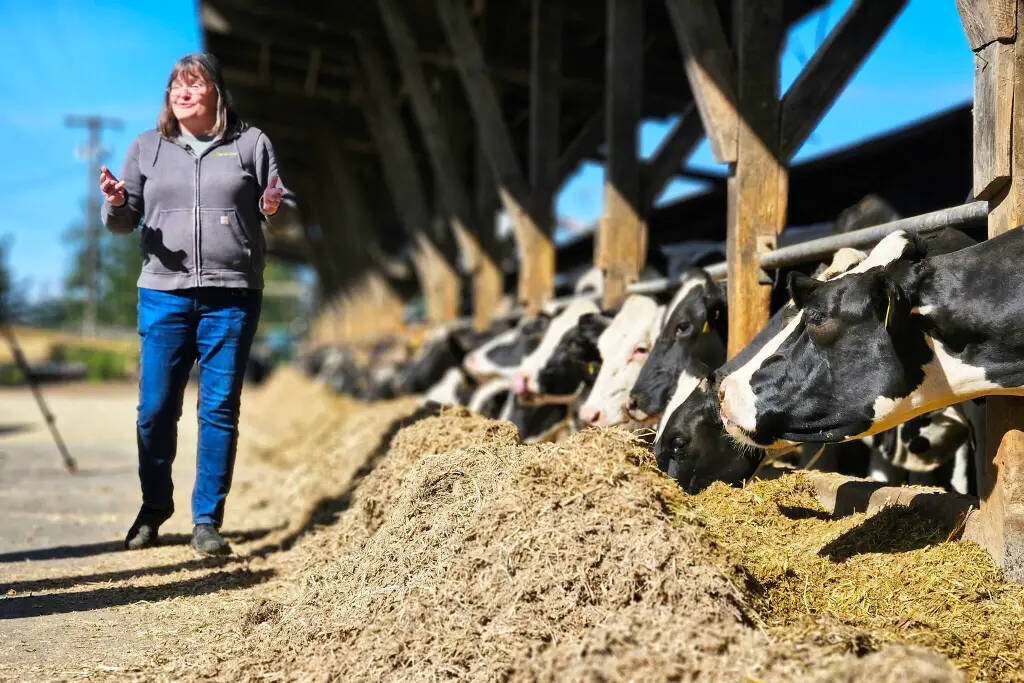


Day to day, local farmers aren’t swimming in cash by any stretch of the imagination.
Yet Washington state’s new “millionaires tax” is expected to hit farmers when they’re arguably most vulnerable: during heavy equipment upgrades, staving off bankruptcy, or trying to retire.
Recently signed into law by Gov. Bob Ferguson, the “millionaires tax” — due to start on Jan. 1, 2028 — is a 9.9% tax on households earning for than $1 million a year. It is already facing legal challenges.
That tax only applies to everything earned after that initial $1 million in taxable income, so a household bringing in $1.5 million would be taxed $50,000.
The tax is estimated to affect about 20,000 households, “or less than 1% of the wealthiest people in Washington,” according to the Washington State Budget and Policy Center. “This means that over 99% of Washingtonians would not pay this tax.”
That 99% would normally include farmers. However, when farmers spend, they spend big.
According to Leanne Krainick of Krainick Dairy in Enumclaw, “farm machinery in and of itself is extremely expensive.” For example, she said her tractors cost between $300,000 and $400,000 each.
“Especially with inflation and the cost of machinery, it doesn’t take much to add up to over $1 million, if you need to liquidate equipment,” she said, adding that she can’t keep track of how many tractors she has.
That’s not a problem for Krainick — at least not yet. “With inflation, who knows?” she said.
But it may be more of an issue for other farmers across the state. According to the Washington Farm Bureau, the farmers most likely to be affected by the “millionaires tax” are those trying to liquidate their assets quickly, for three main reasons.
One is upgrading equipment.
“The Legislature oftentimes encourages farmers to invest in equipment that is greener or uses better spray technology — a variety of things they consider to be greener equipment,” WFB Director of Governmental Affairs Bre Elsey said in a recent interview. “But those pieces of equipment are new and expensive. And so to do that, you have to sell your old equipment.”
Elsey said the way the “millionaires tax” is written does not allow for equipment sales and speciality agriculture equipment to be deducted from the income that is affected by the new tax.
Then there’s rapid liquidation when it comes to debt, and avoiding bankruptcy by selling that speciality agriculture equipment.
“If you liquidate all of your assets, you can then pay your creditors and lenders,” Elsey said. “If almost 10% were to be swiped off the top, it would almost incentivize a bankruptcy proceeding, and we don’t want that for farmers.”
Finally, there’s retirement.
“Farmers pour all of their money into assets (property and structures) knowing that one day they’d sell those assets they’ve been purchasing their whole life and then use a portion of that to retire,” Elsey said. “Some of them don’t have tax deferred retirement accounts as a result, and so in essence they’d be paying almost 10% on their retirement accounts, which disproportionately impacts them as opposed to an everyday employee or another type of business structure.”
Elsey echoed Krainick about how the high cost of machinery makes it easy for farms to exceed the “millionaires tax” income threshold in one year, although it’s rare when farmers get to actually see that cash because it’s all invested in equipment that can cost hundreds of thousands of dollars. Some new models of wheat combines alone are sold for more than $1 million, with a resale value of half that.
“It’s not hard to overcome that threshold with the resale of this equipment knowing that you may never realize a single dollar of the sale,” Elsey said. “If you’re going under, you’re not going to realize those dollars. So you’re taxed as if you’re a millionaire, but you never personally realize the money.”
Elsey hopes that the tax bill can be amended to protect farmers, rather than penalize them. She said that only 1% of farmers nationwide gross $1 million without rapidly liquidizing.
“I don’t think the Legislature wants to penalize people who are going under or are retiring based on a new tax code that was implemented pretty rapidly with no opportunity to amend the language before it was introduced into law,” Elsey said.
As it stands, an average of two Washington state farms close every day, whether due to retirement, bankruptcy, selling land to property developers, or other myriad reasons, and how this tax could affect farmers may exacerbate this, she said.
“That is a terrifying trend,” Elsey said. “Obviously farms in the state of Washington aren’t growing. We’re not even stabilized … it is no longer viable to be a farmer in the state of Washington.”
While Krainick isn’t quite worried about how the tax may affect her and the dairy now, she is concerned about the Legislature being given an inch and taking a mile, especially if it doesn’t adjust the tax for inflation.
“Is it going to stop here?” she said. “That’s my big concern … it makes it really hard to plan.”
She sees a bright side of the situation: revenue collected from the “millionaires tax” will help fund free meals for K-12 schools, which in turn could aid dairies like hers.
That’s “a significant impact to Washington agriculture,” she said. Krainick Dairy supplies Darigold, and its milk is commonly found in Pacific Northwest schools. “That’s the only silver lining I could find.”