
Auburn to allow new co-living housing type to be built
Published 7:30 am Thursday, December 25, 2025
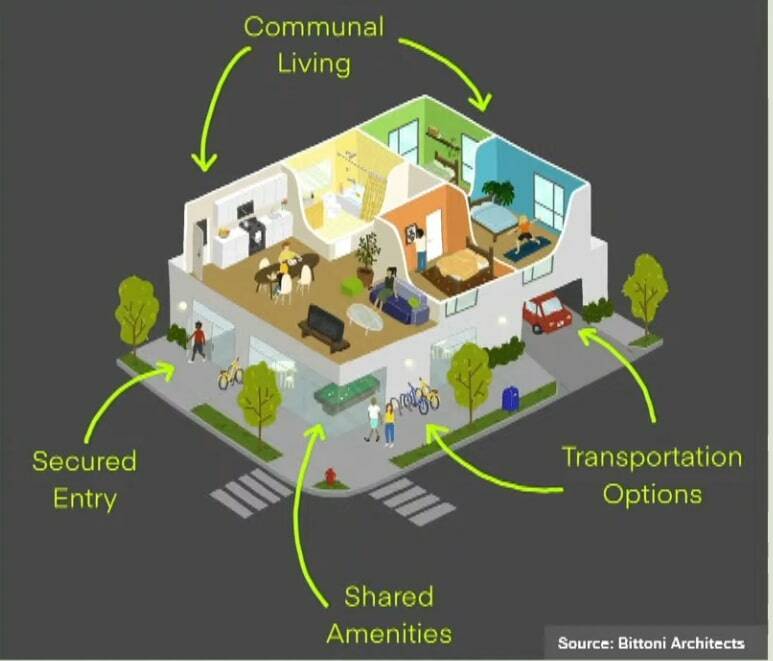
Under a state mandate, the Auburn City Council this month opened the way to a lesser known form of housing called “co-living” to increase the availability of affordable housing and different housing types, and to bring the city into conformity with recent state law.
Co-living housing is a denser housing technology similar to studio apartments, comprised of sleeping units where kitchen facilities and bathrooms, too, are shared in common with other residents, according to Auburn planner Owen Goode.
“This will allow the new use to be permissible in the downtown urban center, residential moderate, residential high, mixed-use, heavy commercial and light industrial zones,” said Goode, noting that the new type of housing could be buildings converted to allow for residential units.
State law says cities planning under the Growth Management Act (GMA) like Auburn must adopt regulations allowing co-living as a permitted use on lots in an urban growth area that allows at least six multifamily residential units, including on a lot zoned for mixed-use development.
Such cities must adopt or amend co-living housing standards by Dec. 31, 2025. If the updates are not completed by then, the statutory requirements will supersede, preempt, and invalidate any conflicting local development regulations.
The new regulation reflects the grim reality that it costs much more to buy a home in Washington and across the country than it did just a few years ago. Housing is considered affordable if it costs less than 30% of household income, but many pay 50% or more.
Wages also haven’t kept pace with soaring housing prices, especially for purchase.
The U.S. has a massive shortage of affordable rental and owner homes, with low-rent options disappearing, city planners noted. The problem, however, is not only a shortage of affordable houses out there, but also the ill effects of restrictive zoning, rising construction/insurance costs, and stagnant wages. For low-income households and younger people, the housing affordability crisis is especially acute, delaying family formation, hindering economic mobility, and increasing poverty.
The social impact is increased homelessness, delayed family formation, reduced wealth building, and worsening inequality, city planners noted.
Among the numerous answers to the crisis are zoning reform, increased supply, public-private partnerships, and direct aid, but all require systemic, multi-pronged government and private action, according to city planners.
Auburn’s ordinance does not establish room dimensional standards, nor does it require a mix of unit types, or require mixed-use or other uses as part of a co-living housing project. And it cannot require co-living housing to provide off-street parking when the project site is within one-half mile walking distance of a major transit stop or provide more than 25 % off-street parking spaces per sleeping unit.
Auburn’s Planning Commission reviewed and recommended approval of the co-living housing text amendment after a public hearing on Dec 2, 2025.