
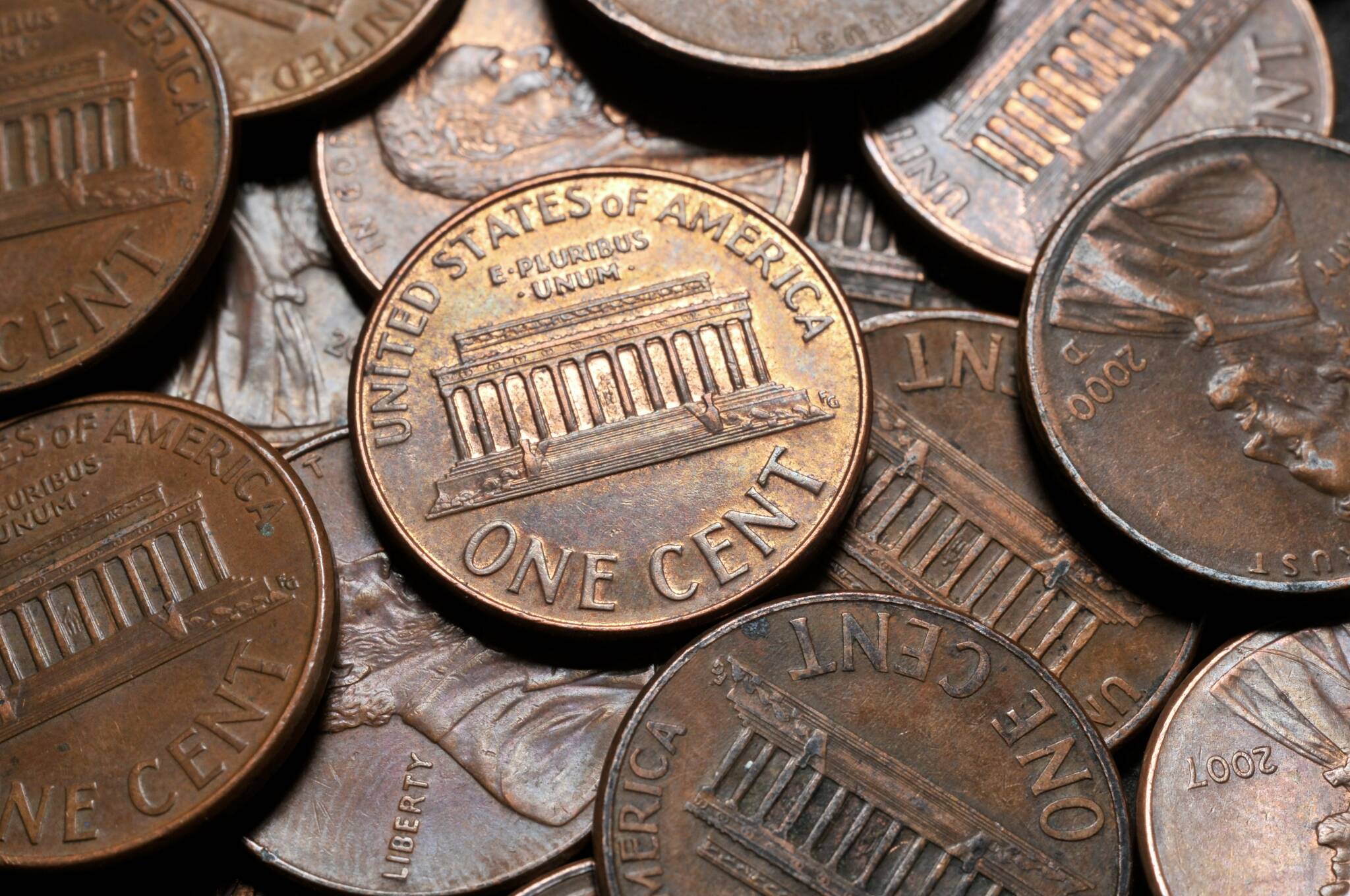
When the federal government stopped making pennies, it left it up to states to decide how retailers deal with the change.
In Washington, lawmakers are trying to come up with a uniform approach for merchants that is easy to understand for consumers.
Legislation making its way through the House and Senate would direct retailers to round cash transactions up or down to the nearest 5 cents when they make change. Payments with credit or debit cards would not be affected.
“This was not something that I wanted to do or write or have to deal with during this short session, but it does matter,” said Rep. April Berg, D-Mill Creek, sponsor of the House bill. “It is going to cost businesses time and money. It’s going to cost customers frustration at the register, unless our state steps in and comes up with clear, consistent rules.”
Retailers want guidance. At a pair of public hearings, they asked for added language to ensure rounding does not affect their tax obligations and protection from consumer lawsuits that might arise from the process.
Grocers and convenience store owners have been waiting months for the state to deal with this issue, said Molly Pfaffenroth, government affairs director for the Washington Food Industry Association.
“Over the holidays, one of the busiest times of year for grocery stores, my members have experienced challenges providing exact change,” she told the House Finance Committee last month.
Many stores have been rounding up or down to the nearest nickel, but have been concerned about this practice without official guidance from the state, she said. “This bill provides the guardrails that we need,” Pfaffenroth added.
Cashing out
The federal government announced in December that it had stopped making pennies because it was too expensive. The tab to manufacture a single penny nearly tripled in the past decade to around 3.69 cents, according to the U.S. Department of the Treasury.
The U.S. Mint projected a savings of $56 million a year by halting penny production.
They’re not gone. There are still roughly 114 billion pennies in circulation and will be for a while. Customers who have pennies can still use them for payment. Some grocery outlets are offering incentives to get customers to bring pennies to them.
Under House Bill 2334 and Senate Bill 6230, for cash purchases, if the total price, including taxes, ends in 1 cent, 2 cents, 6 cents, or 7 cents, the amount is rounded down to the nearest multiple of five. If it ends in 3, 4, 8 or 9 cents, the bill will be rounded up.
For example, if a purchase is $4.97 and a customer hands over $5, the cashier would round down to $4.95 and provide a nickel in change. If the amount is $4.98, the cashier would round up and no change would be paid out.
Retailers can take an exact amount if they want pennies. Business representatives asked that this be made clear in the proposed legislation.
The state Department of Revenue estimates up to 400,000 taxpayers with retail sales will be affected. If the bill is enacted, the department will need to issue guidance and update relevant information on its website. That work can be covered within its existing budget, according to the most recent fiscal analysis.
On Feb. 6, the House Finance Committee advanced an amended version of House Bill 2334 that contains changes, authored by Berg, to address concerns of grocers and retailers.
For example, it makes clear sellers are not required to round and it bars rounding if the last digit is 0 or 5. And the latest version spells out that any taxes and fees owed by a business are to be based on the purchase price prior to rounding.
Another change clarifies that if the purchase amount after rounding is different than a displayed or advertised price it does not violate the Consumer Protection Act.
Senate Bill 6230 passed out of the Senate Business, Trade and Economic Development Committee Feb. 4 and was sent to the Senate Transportation Committee. That committee must consider it because of a potential financial impact on the state Department of Licensing which is funded through the transportation budget.
Washington State Standard is part of States Newsroom, a nonprofit news network supported by grants and a coalition of donors as a 501c(3) public charity. Washington State Standard maintains editorial independence. Contact Editor Bill Lucia for questions: info@washingtonstatestandard.com. Follow Washington State Standard on Facebook and Twitter.